
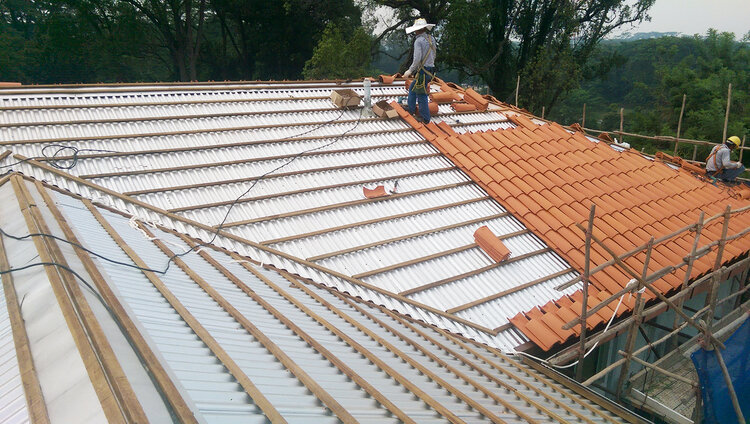
Your roof is your home’s or business’s first and most continuous line of defence against Singapore’s heavy rain, intense UV, and high humidity. When it is installed correctly and maintained well, it does its job silently for decades. When it is installed poorly, it becomes a recurring source of water leakage, structural damage, and repair costs that compound with every monsoon season.
The market for roofing services in Singapore includes highly experienced, licensed specialists and, at the other end, unlicensed operators who compete on price and underdeliver on quality. The difference between the two is not always obvious from a first conversation or a quotation. This guide gives you a practical checklist to evaluate any roofing contractor in Singapore thoroughly so you can make a confident, informed decision based on long-term value rather than the lowest upfront number.
Check Licensing and Certifications: Non-Negotiables for Any Roofing Contractor in Singapore
Before evaluating experience, materials, or price, verify that the contractor meets Singapore’s basic legal requirements. These are not optional extras; they are the baseline.
BCA Registration
This is the foundation. The Building and Construction Authority (BCA) registers construction contractors in Singapore, and roofing work falls under the CW01 workhead (building structures, facades, and roofing). A BCA-registered contractor has demonstrated adequate financial capacity, technical qualifications, and a verified track record. An unregistered contractor cannot legally obtain work permits, faces financial penalties, and exposes you to the risk of voided insurance and unenforceable warranties. Verify any contractor’s registration directly via the BCA Directory; do not rely on the contractor’s own claims.
The Builder Licence Class
It determines the scale of projects a contractor can undertake. Class 1 allows projects of any value; Class 2 permits projects up to SGD 6 million. Licences are valid for three years and must be renewed. Always confirm the licence is currently active, not expired.
BizSAFE Certification
This is obtained from the Workplace Safety and Health Council, which demonstrates a contractor’s commitment to safety on site. Roofing is classified as high-risk construction work in Singapore. BizSAFE Level 3 is the minimum standard required for government tenders; higher levels indicate a more mature safety management system. Ask for certification level before work begins.
Insurance Coverage
Workers’ Compensation Insurance (WICA) is mandatory for all manual workers on a roofing job. If a worker is injured on your property and the contractor carries no WICA coverage, your own liability exposure can be significant. Public liability insurance is not legally mandated, but should be a non-negotiable requirement in your own evaluation. Ask for proof of both before signing anything.
Evaluate Experience and Roof Installation Specialisation
Credentials establish legitimacy. Experience determines quality. Singapore’s tropical climate, persistent humidity, UV index of 8 to 12, monsoon downpours, and daily thermal cycling demand a contractor who understands what these forces do to roofing materials over time, not one who is applying temperate-climate approaches to a tropical context.
Years of Experience in Singapore’s Climate
A contractor with two decades of work in the UK is not automatically qualified for a roof installation in Singapore project. Ask specifically about local experience: how long have they been operating in Singapore, and how many projects similar to yours have they completed here in the past 12 months.
Residential and Commercial Expertise
Commercial roofing involves large surface areas, industrial-grade specifications, and different structural and drainage requirements. Residential roofing demands precision on smaller scales, careful attention to aesthetic detailing, and an understanding of how roof construction affects a home’s interior comfort and value. Confirm the contractor has direct experience with your property type: HDB, landed residential, shophouse, or commercial.
Confirm Experience Across the Roofing Systems
Common systems in Singapore include metal roofing (corrugated steel or aluminium, lifespan 30–50 years), clay and concrete tiles (50+ years with proper installation), flat roof waterproofing systems (torch-on, liquid-applied, and EPDM), and full re-roofing. A contractor who specialises in only one system may not be the right match for your specific requirements.
Review Past Projects and Customer Testimonials/Reviews
A contractor’s track record tells you more than anything they say about themselves.
The Portfolio of Completed Projects
This should include actual photographs of completed work, not stock images or renders. Before-and-after comparisons for projects similar to yours are particularly useful. Look for visible detail: tile alignment, flashing installation at junctions, membrane application at edges, and gutter integration. Generic “finished roof” photos without context provide little useful information.
Verified Client Reviews
Verified client reviews on Google Business and Facebook provide an independent picture of how a contractor actually performs. Look for reviews that mention specific communication, adherence to agreed timelines, site cleanliness, and responsiveness to post-completion issues. Consistent positive feedback across multiple platforms is a strong signal. A single glowing review on a contractor’s own website is not.
Assess Roofing Materials Quality and Workmanship Standards
The materials a contractor recommends, and the standards they apply in installation, determine how long your roof performs and what it costs to maintain.
Common roofing materials in Singapore and what quality looks like
- Metal roofing (corrugated steel or aluminium): SGD 6–12 per sq ft; lifespan 30–50 years. Quality indicators: metal thickness, type of protective anti-corrosion coating, UV-resistant finish. In Singapore’s humid coastal environment, thin or poorly coated metal corrodes significantly faster than rated.
- Concrete tiles: SGD 10–15 per sq ft; lifespan 50+ years. Quality indicators: density, compressive strength, colour consistency. Must be installed with an appropriate underlayment for Singapore’s rainfall intensity.
- Clay tiles: 50+ years when properly installed. Must meet SS 70 (Singapore Standard for clay roofing tiles). Installation quality, particularly the fixing method and underlayment \ determines whether the design life is achieved.
- Waterproofing membranes for flat roofs: Torch-on membrane SGD 6–12 per sq ft; liquid-applied SGD 4–8 per sq ft; EPDM rubber (30–50-year lifespan). All systems must comply with SS 525, Singapore’s standard for waterproofing. The quality of the application matters as much as the material specification.
Budget materials deteriorate faster in Singapore’s climate
Persistent humidity and high UV exposure accelerate the degradation of low-grade coatings, thin metals, and basic bituminous membranes. A roof specialist in Singapore will advise on material selection appropriate to your roof type, exposure, and budget, not simply the option that is cheapest to install.
Workmanship warranty in writing
Typical Singaporean contractors offer up to five years’ workmanship warranty. Reputable contractors offer ten or more. The warranty must specify in writing what it covers, including installation defects, improper sealing, flashing failures and what maintenance obligations are required to keep it valid.
Understand Warranty Coverage and After-Sales Roofing Services
A warranty is only as valuable as the contractor’s commitment to honour it.
Workmanship Warranty
A workmanship warranty should be provided in a written document, not stated verbally. It should define the duration, the defects covered, the exclusions, and the process for making a claim. A contractor who offers a ten-year workmanship warranty is signalling genuine confidence in their installation quality. One who cannot commit to warranty terms in writing is signalling the opposite.
Manufacturer Material Warranties
Manufacturer material warranties are separate from workmanship warranties and cover defects in the material itself. Metal roofing manufacturer warranties typically run 25–30 years. Concrete and clay tiles: 25–30 years. Waterproofing membranes: 10–15 years, depending on type and maintenance. Both warranties should be in place; a material warranty without a workmanship warranty leaves installation defects uncovered.
Emergency Repair Response
Emergency repair response is a practical question worth asking before you sign. Singapore’s monsoon seasons do not schedule themselves conveniently. Ask directly: What is your response protocol for an emergency roof leak? A reputable roofing contractor should be able to confirm a clear emergency contact process and a realistic response timeframe.
Ongoing Maintenance Options
Ongoing maintenance options distinguish contractors who view roofing as a one-time transaction from those who take a long-term view of their work. Scheduled inspection, cleaning, minor repairs, and coating reapplication over the life of a roof is significantly cheaper than emergency remediation. A contractor who offers structured maintenance packages is one worth building a relationship with.
Compare Quotations the Smart Way
Comparing quotations is not simply a matter of finding the lowest price. It is a matter of understanding exactly what each contractor is proposing to do and what they are not.
Professional Quotation
A professional quotation should itemise materials (specific product names, grades, and quantities not “suitable materials”), labour, scaffolding or access equipment, disposal of existing roofing materials, and any permit or inspection fees. A single lump sum figure tells you nothing about what is and is not included.
Scope of Work
The scope of work must be defined precisely. Does the scope include the removal of existing tiles or membrane, or only installation on top? Does waterproofing cover all penetrations, edge details, and upstands, or only the flat field? Does re-roofing include the replacement of deteriorated battens or only surface materials? Ambiguity in scope is the most common source of disputes and unexpected additional costs.
Suspiciously Low Quotes
Watch for suspiciously low quotes. A quotation more than 30% below comparable market rates typically reflects reduced material quality, insufficient labour time allocated, or a contractor whose financial position makes project completion uncertain. The cheapest roof repair contractor is rarely the most cost-effective choice once the full cycle of repairs is considered.
Red Flags to Avoid When Hiring Roof Repair Contractors in Singapore
Knowing what to look for also means knowing what to walk away from.
No Physical Address or BCA Licence
A contractor who cannot provide a verifiable business address and a current, searchable BCA registration number should not be considered. Verify independently; do not accept the contractor’s word alone.
No Written Contract
Verbal agreements offer no legal recourse. Every scope of work, material specification, timeline, payment schedule, and warranty commitment must be documented in writing before any work commences.
Large Upfront Cash Payment Demands
A reasonable deposit for roofing work is 20–30% of the project value, tied to mobilisation. Demands for 70–90% upfront, particularly requests to pay into a personal account, are significant red flags.
Poor Communication
A contractor who is slow to respond, vague in answers, or dismissive of direct questions during the evaluation stage will not improve once they have been paid. Communication quality before signing is a reliable predictor of communication quality throughout the project.
No Insurance
Request proof of workers’ compensation insurance and public liability coverage before any site access. Without WICA, an injury on your property can create direct financial and legal exposure for you.
High-Pressure Tactics
Any contractor who creates artificial urgency, offers valid-only-today, immediate sign-or-lose situations, or pressures to bypass competitor comparisons is not demonstrating the professional confidence of a contractor who knows their work stands on its own merits.
No Warranty Offered
If a contractor will not commit to workmanship warranty terms in writing, treat it as a clear signal about the standard of work you should expect.
Why Choose MVM: Trusted Roofing Contractor and Roof Specialist in Singapore
MVM is a licensed roofing contractor in Singapore, BCA-registered and fully insured, with a certified team operating to the safety and workmanship standards that the evaluation framework above identifies as non-negotiable. We do not ask you to take our credentials on trust; they are verifiable.
Our track record spans a wide range of residential and commercial projects in Singapore: new roof installation, re-roofing, roof waterproofing, metal roofing, tile repair and replacement, and leak repairs. Our customers can speak to the quality of our work, and we are confident in providing references for projects comparable to yours.
Every MVM project uses materials specified for Singapore’s tropical climate, selected for long-term performance under UV, humidity, and monsoon conditions, not just the lowest available cost. Our installations comply with BCA requirements and relevant Singapore standards, with full documentation.
Our quotations are itemised and transparent. The scope of work is defined clearly before any work begins, with no vague pricing or material substitution. Our workmanship warranty is committed in writing because we stand behind what we build.
MVM also remains available after project completion for emergency response, scheduled roof maintenance, and post-installation inspection. Choosing MVM is not a single transaction; it is a long-term working relationship built on roofing expertise, professional integrity, and a commitment to your peace of mind.
Make a Confident, Informed Decision for Your Roof
Choosing the right roofing contractor in Singapore is one of the most consequential decisions a homeowner or property manager makes. Applied together, the eight criteria in this guide, licensing, experience, portfolio, materials, warranty, quotation transparency, red flag awareness, and after-sales support, give you a rigorous framework for separating contractors who will deliver from those who will not.
In Singapore’s climate, a roof installed correctly to the right standard is a long-term asset. One installed poorly is a long-term liability that costs more to manage with each passing monsoon season. Long-term value is built at the point of contractor selection, not recovered afterwards.
Contact MVM today for a professional consultation: transparent advice, no obligation, and a clear assessment of your roofing needs from a licensed, experienced team you can trust. Your home deserves nothing less.